
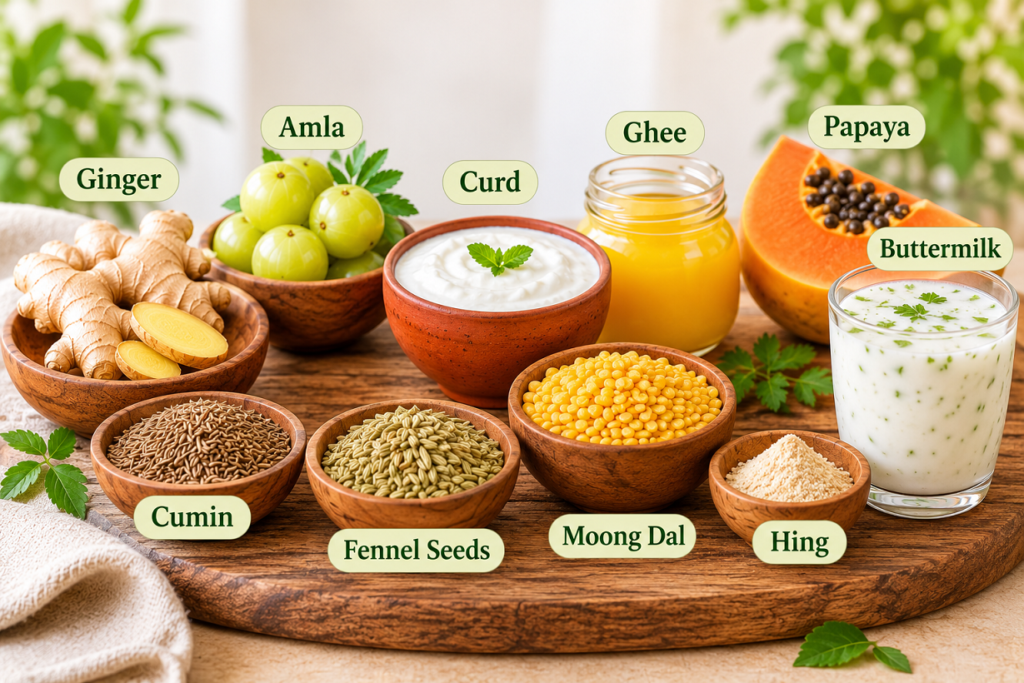
Do you frequently experience bloating, heaviness after meals or digestive discomfort?
The next dew minutes can be an eye-opener for you.
According to Ayurveda, a healthy digestion is not just about what you eat but also about how efficiently your body processes that food.
Ayurveda also mentions the importance of a balanced agni (digestive fire) in our body.
Understanding Agni: The Ayurvedic concept of digestive fire
Agni is the vital biological fire that is located in the stomach and the duodenum (combined called Grahani). This is the main component and is also called Jatharagni.
More about Agni here https://royveda.com/why-is-digestion-so-important-in-ayurveda/
How does Ayurveda explain weak digestion?
In Ayurveda, agni governs digestion, metabolism and the conversion of nutrients into usable energy for the body. When this digestion process becomes weak, it is specifically referred to as Mandagni (low digestive fire). In this condition, the body cannot digest food properly leading to the formation of ama (undigested food particles) that clogs the srotas (channels) of the body giving rise to multiple health issues.
Common causes of weak digestion:
Inconsistent routine: Eating at irregular times or skipping meals.
Improper food choices: Eating cold, heavily processed and incompatible foods.
Excessive fluids with meals: Drinking cold water or beverages with meals.
Mindless eating: rushing into meals or eating in stressful condition.
Why food choices matter for maintaining a digestive balance?
Food choices directly dictate the composition of your gut microbiome, protect the integrity of the intestinal lining and regulate smooth movement though the digestive tract.
- Shaping the gut microbiome –
Trillions of microbes live in the gut which help breakdown food, synthesize vitamins and fight infections.
Foods rich in fibers (vegetables, legumes and whole grains) and prebiotics (like banana and onions) help feed those helpful bacteria.
Fermented foods like Greek yogurt, kimchi and sauerkraut introduces live bacteria that increases microbial diversity and lowers inflammation.
- Supporting the intestinal lining –
Diet rich in whole foods, vegetables, fruits and healthy fats helps to strengthen your gut barrier helping to keep toxins out.
On the contrary, diet including processed foods, refined sugar and fried items can weaken the gut lining ultimately giving rise to bloating, acidity and gas.
- Regulating movement –
Insoluble fibers found in vegetables and leafy greens add bulk to stool which speeds up transit time and prevent constipation.
Adequate hydration is also necessary at the same time for the waste to move freely thought the digestive tract.
10 Best Ayurvedic foods that support healthy digestio
Ginger (Adrak) – A traditional digestive aid.
Ginger promotes normal stomach movement thus aiding in the movement of the food from the stomach into the small intestine.
It also helps in relieving the symptoms of nausea and vomiting by intervening between the receptors in the gut and the central nervous system.
Ginger may also help relieve nausea and improve gastric motility.
Cumin (Jeera) – A spice for digestive comfort.
Cumin stimulates the release of digestive, salivary and pancreatic enzymes from helping the body to break down the food more efficiently.
It also increases the secretion bile juice which is essential in proper digestion of fats.
Limited clinical studies also indicate the role of cumin in managing the symptoms of Irritable Bowel Syndrome (IBS).
Amla (Indian gooseberry)– A nutrient-rich Ayurvedic fruit.
Amla is considered as a rasayan (rejuvenator) in Ayurveda. It is advocated to consume amla on a daily basis.
The natural polyphenols present in amla act as prebiotics supporting the healthy gut microbiome present in the gut.
Amla is also rich in dietary fiber which add bulk to stool that stimulate intestinal muscle contraction preventing constipation.
Fennel seeds (Saunf) – A traditional after-meal digestive.
The active compound, anethole, acts as a anti-spasmodic helping relax the muscles of the gastrointestinal tract.
The fennel seeds also help relive gas, bloating and acid reflux.
Fennel seeds also aid in digestion by triggering the saliva and the gastric juices which speed up digestion.
Curd (Dahi) – Supporting gut health through fermented food.
Curd improves digestion by supplying live bacteria that improve the gut flora balance.
A balanced gut microbiome increases the efficiency of the digestive system to digest food more efficiently.
Ghee –
In Ayurveda, ghee is considered to stimulate the agni (digestive fire) which helps in improved digestion.
Ghee also helps to absorb the fat-soluble vitamins like Vitamin A, D E and K from the food you eat.
Ghee also has a high smoke point of 230- 250 degree Celsius making it ideal for high heating unlike regular butter.
Moong dal – A nourishing and easily digestible food.
Moong dal is rich in fiber, namely pectin, which help in aiding the digestion by regulating the movement of the food through the gut.
Moong dal is also good sources of resistant starch which nourish the healthy gut bacteria.
Papaya – A fiber-rich fruit for digestive health.
The compound Papain present in the Papaya helps break down protein chains in the food easing the digestion process.
The high water content in papaya helps to hydrate the body and relieve in constipation.
Hing (Asafoetida) – A traditional spice for bloating.
It acts as a carminative that prevents gas formation and helps expel trapped gas from the intestine.
It contains anti-spasmodic agents like ferulic acid and umbelliferone that helps relax the smooth muscles of the gastrointestinal tract.
Buttermilk (Chaas) – A classic Ayurvedic digestive drink.
It introduces beneficial bacteria to the gut microbiome improving digestion and strengthening the immune system of the body although it totally depends on the preparation.
Spice it up with herbs and the combination is even better for digestion.
How to include these foods in your daily diet?
Start the morning with warm water or herbal tea.
Replace refined seed oils with ghee or clarified butter.
Include digestive spices like ginger, cumin etc into your daily dishes.
Try to eat seasonal and local produce.
Include legumes and whole grains into the diet. Be fully aware to the sight, smell and taste of the food by blocking any other distractions.
Habits that support better digestion
Eat meals at consistent times.
Avoid overeating.
Avoid constant snacking.
Chew the food thoroughly before swallowing.
Prefer freshly prepared, balance meals instead of processed foods.
Movement of the body improves digestion.
Keep the heaviest meal of the day during lunch.
Final thoughts: Better digestion begins with everyday choices.
Healthy digestion is not built overnight, nor does it depend on a single food.
From moong dal to buttermilk, from ghee to cumin, traditional Ayurvedic practices offer ways to introduce variety into everyday meals.
However, what matters is consistency: eating balanced meals at regular periods, eating seasonal foods and paying attention to how your body responds.
After all, supporting digestive health is not only about what you eat.
It’s also about how you eat.
Small changes in your daily diet can be the beginning of a healthier relationship with your food.
Bon appétit !
FAQs :
What are the best Ayurvedic foods for digestion?
Ginger, cumin water, moong dal, butter milk are some of the foods that help in the digestion.
Which Ayurvedic foods may help in bloating and gas?
Moong dal, buttermilk and hing are some of the foods that help in bloating and gas.
Is ginger good for digestion according to Ayurveda?
Yes. Ginger is generally considered good for digestion.
What should I eat at night for better digestion?
For better digestion, choose a small, light and easily digestible food preferable 3 hours before bed-time.
What is agni and why is it important in Ayurveda?
Agni (Jathragni) is the digestive fire that is theoretically present in the stomach and the duodenum and is responsible for the digestion of the food and conversion into usable energy by the body.
Can Ayurvedic foods improve gut health?
Several foods used in Ayurvedic diets, including fermented foods, fiber-rich legumes and fruits can contribute significantly to a healthy digestive system. However, individual responses vary and traditional Ayurvedic concepts should be verified by a Ayurvedic doctor before being implemented.